Trigger warning – this story discusses the themes of child sexual abuse and child abuse which some people may find distressing.
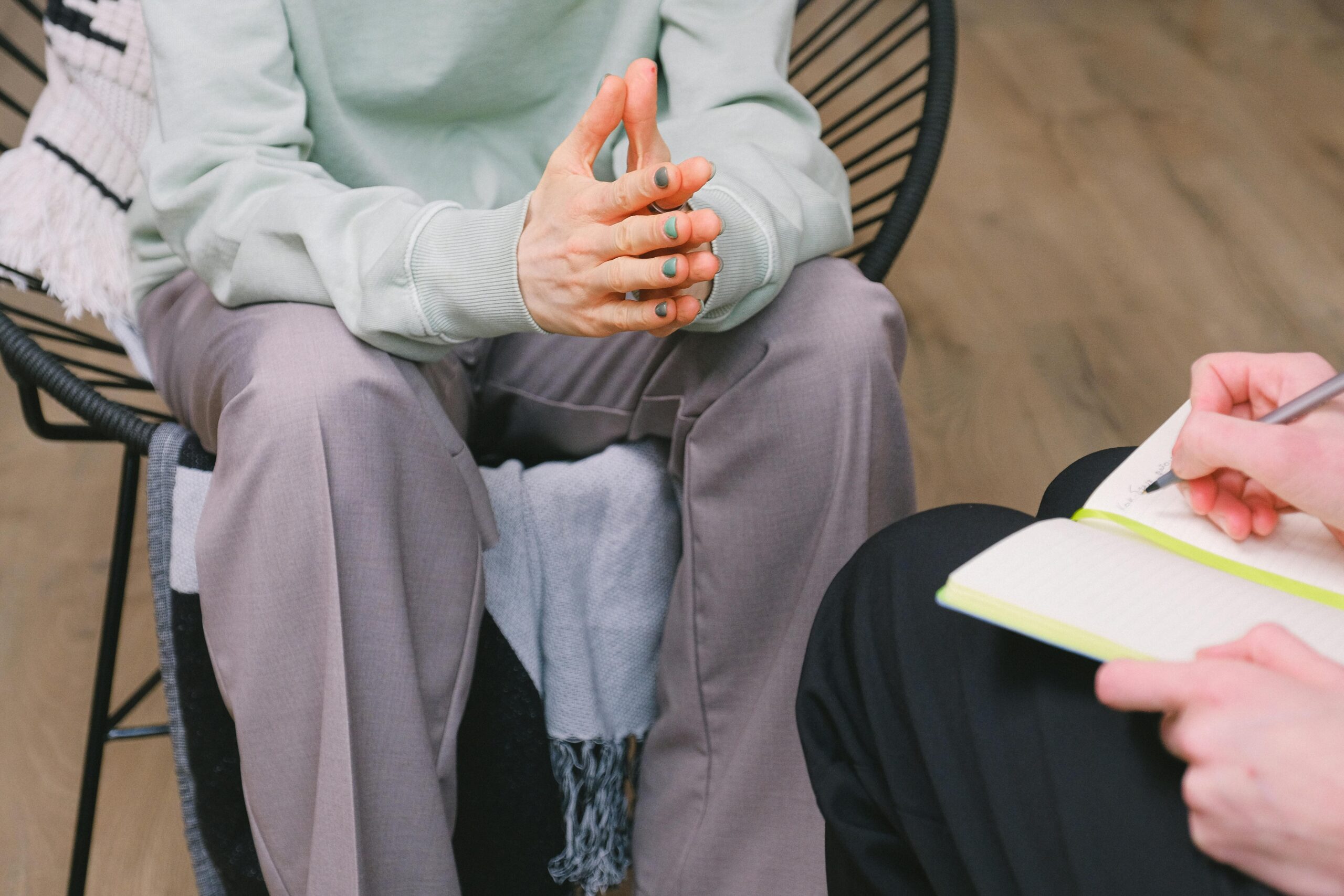
My first counselling session that began to raise questions about the just-surfacing childhood trauma came about because I was concerned that my eight-year-old daughter was in danger. I sought an urgent appointment with the local Sexual Assault/Crisis Service. In the intake appointment we determined that my daughter was safe, I had made sure she was. And then we sort of agreed I was the one in a precarious state.
I knew my mid-life angst and anger had been getting the better of me – I could see the effects in my more private roles as parent and partner. Both the Social work and Yoga teacher training in my background were encouraging me to face things and seek help. So, I agreed to an appointment for myself.
Counselling is a very individual thing … what works for me might not work for you. With post-traumatic stress, an essential element is the way the counsellor ensures the person is in control as much as possible, thus minimising the likelihood of re-experiencing the lack of agency that characterised the trauma of past events. My healing was very dependent on being in control. The protective part of me needed to be absolutely sure the environment was safe for my inner, traumatised 2-5 year old to come to the fore and be nurtured. After all, there had been many signs over the years that this part of me needed help to understand and process what had been happening. As in so many cases, my family and broader environment had not seen or recognised these signs or been able to respond. Sometimes there was even open denial, avoidance or re-framing, doubt and disbelief or making me the problem.
At a very early age, then, I had learnt that the authority/caring figures who were responsible for me and loved me, were not always able to see or meet my best interests. Family dynamics and patterns were built around the blocks and blind-spots that trauma had created across generations, so the truth of behind-closed-doors yelling, violence and abuse remained hidden. Maintaining ‘happy family masks’ was, in many cases, more important than meeting the needs of individuals in the family and ensuring their safety.
Even before I was three, I had learnt strategies to protect myself. If I was ever going to fully trust the natural flow of life, other people or even my whole self, I firstly needed to gradually face issues of control, trust and power in relationships. It was crucial for me to challenge and screen my counsellor Faye (name changed) and even push back against her, perhaps many times over. And it was essential for Faye to acknowledge the healing power within me. I needed to know she would let me remain front and centre rather imposing her own power and expertise, even if it was based on verified theories, therapeutic models or assessment processes. Of course, her theoretical and therapeutic training and background needed to inform how she saw me and worked with me, but starting from ‘where I was at’ needed to be the core and the pre-occupying principle at every stage. Then we could work together – me directing and Faye gently nudging, reflecting, dropping in one-liners and tentative questions.
Over the years we worked together I would gradually come to see Faye as the psychological equivalent to a Consulting Structural Engineer in my process of re-building myself from the ground up. It’s my project, I need to be the one responsible for the re-building – even though I will always need to vent (in my journal or otherwise) about having to be the one to fix up other people’s mistakes, negligence, misuse and abuse that messed with my foundations. I am, however, the only one who can know, or come to learn, the details of what needs to be rebuilt, how and when. At every stage of this project, it has been very useful for me to check in with a consultant who has intimate understanding of what other self-renovators, people transforming and healing themselves, have gone through in this sort of terrain. Especially when it comes to re-inventing our relationships with the world.
Thankfully, well before I met Faye, I had found regular journaling helpful in riding out the life-changing rollercoaster that is ‘parenting’. I was striving to break cycles of behind-closed-doors yelling and out-of-character explosions that were a silent, hidden feature of generations of my extended family. Regular Yoga and walking were also helping me deal with internal turmoil as shards of memory around my early childhood abuse came together for the first time. Beneath a veneer of seeming-to-cope, I was a powder-keg of confused complexities.
After my first counselling session with Faye I recorded the following reactions (mid 2007, midnight – 2am).
What was she getting at – asking when and where I feel safe/unsafe? I have the sense I missed the point of that exercise, or did I reveal something? She seemed to have a reaction to something here.
What is her assessment of me? What is she ‘treating’ me for? What’s all this about triggers? Does she think I have PTSD? Or some form of mental illness?
To be honest I am not sure I want to go back, even though she was very warm and I really want to like her.
I’ll email her and ask what her plans are, what will we actually be doing together? Did she have an ulterior motive for giving me that article on recovery, with its discussion of ‘multiples’ and ‘dissociation’ that she wanted to delete? Part of me would be devastated if she did – I so deeply need to trust her and know she is being completely honest and open with me.
Her suggestion, when she found out I journaled, was to write the anger – write out what is arousing me. Why did she use that word so much?
After journal-venting angst and anger from my current life, I sat back and noticed an uncharacteristic, machine-gun style, spitting of words onto paper. Words and a rhythm hinting at what had been stored in me for so very long.
These angry words and their energy are familiar. I think they remind me of the blocked, thwarted, silently raving rhythms in the family I grew up in. Unseen undertows and then terrifying out-of-character eruptions, harpoons, sneaky hooks, bombs, grenades. So much hidden there in my otherwise happy childhood.
In the next part of my journal, an onlooker would see a slight change of focus, I started to speak to Faye directly, questioning whether she had been manipulating me in our session and with the article she gave me to read. Then I soon found I was answering myself:
“I do trust you Faye, even though I want to know more about you before we go any further. I think I am reading the manipulation stuff into it because that is what I have experienced from people close to me before – even those who genuinely loved me. My early life lesson was – ‘If you trust people, open up to people and let them in then they will take whatever privileged information or access they have gleaned and turn it back on you! They are likely to control you, judge you, tease and torment you, wield power over you, lose the plot with you or meet their own needs at your expense’.
So, Faye, I have all this stuff I want to bounce back at you.
- Why did you use the word aroused? Did you mean it in a sexual way?
- It more feels like hurt and rage, anger and pent-up energy.
- Why am I feeling like this now?
- Why has my power been so thwarted, trapped?
I need to list the childhood stuff, especially from the house we lived in when I was 2-5 years old.
For the first time, I proceeded to list many of my disturbing memories from that time. Most of it we might call explicit memories of adults ‘losing the plot’ with me. But some of this journal gives hints of floating fragments or intrusive memories or flashbacks that had always been the same but had never made sense on their own.
This feels huge. But it’s all from so long ago, why is it unsettling me so much?
What is happening to me?
Faye, why didn’t you edge towards this more in our session?
I see now, the four-year-old in me had warmed to you, trusted you and wanted you to nurture this out of me. But yes, now I also see, I want and need to check you out more first – what’s the plan, the assessment, the labels you might want to apply to me? Are you going to tell me what is wrong with me, what I should do, what I should have done?
Many years later Faye told me my email that detailed all of this, challenged her. She wasn’t sure about meeting the intellect/cognitive state my questions were coming from. I will be eternally grateful that she didn’t try. When we came to our second session, part of me was still seeing it as potentially my last, but Faye said that she was not focused on diagnosis, assessment etc. She simply and deeply believed everyone has their own healing power within them and her role was to help people be safe as they unlocked that. On hearing this I melted. Or more accurately, with hindsight, I can say it was the defensive and protective parts of me finally knowing they could relax a bit and learn how to melt into the background.
Such was the turbulent beginning to what ended up being an extremely productive seven-year relationship.
This turbulence shows some of the foundational issues for effective counselling for CPTS/D (Complex Post Traumatic Stress/Disorder). The sessions with Faye, combined with journaling and my regular Yoga became my most treasured guides, supports and guard-rails on the path to claim more of my whole, integrated self. I even gradually re-claimed the parts of me that had been frozen in terror for over forty years because of the transgenerational blocks, blind-spots and abuse.
I think it was a year or so into our process together that Faye sat back in one session, after I had taken us through issues and surfacing realisations that had come through my journaling in between sessions. She had an unusually bemused expression. I remember it so clearly. She leaned back and said “I’ve been wondering what my role is here, with you … now I see, it’s to be the witness. To witness all that you are unravelling”.
Perhaps I remember this clearly, as if it were yesterday, because it confirmed that this was someone who had consistent and infinitely deep respect for the wisdom of my sub-conscious and my innate power that had been stifled in the traumatic moments of my babyhood and toddler years. With hindsight, I also see it was a moment that showed me it was Ok to need Faye (and thus ‘others’ more generally). It affirmed both the scope for my control and a role for her that I could rely on.
So, if you ask me what to look for in a Counsellor, I can’t really come up with a list of training and qualifications or personal and professional qualities (except I cheekily suggest a degree that covers psychological trauma rather than engineering might be a good start!). It is important that they are trauma-informed, are qualified and have experience supporting people to do the work through their thoughts, reactions and memories. I have seen and experienced the abundant hope and positivity that can exude from those who work in mental health and embrace the paradigm shift that our modern, growing trauma wisdom brings.
At last, we can change the patterns, break the cycles that for centuries have led each generation to pass on trauma, only for the next generation of professionals to re-discover it as if for the first time or under a different name. Counsellors and the whole range of therapists now have an ever-expanding plethora of constructive, proven pathways and perspectives that help foster safety as well as growth and support genuine emotional, mental and physical healing that addresses the life-long effects of childhood trauma, while lessening the need for medical interventions.
More and more, each person can be allowed to direct their own process without the counsellor feeling threatened or redundant. Workplaces, supervisors, evidence-based reporting processes and government policies need to support conditions that allow counsellors to ‘sit back’, as Faye did.
About the author: Lynn Romeo
Lynn is grateful to bring together her Social Work background, years of teaching Yoga and all she has learnt, and become, in her sixty-plus year healing and transformation process. She is part of a surprisingly large cohort whose early childhood abuse was re-framed, ignored or covered up, so it remained hidden in her resilient, independent persona until surfacing in her mid-life.
Morning Yoga on her deck over-looking the Derwent River, regular writing and tune-ups with a second trauma counsellor are fuelling her ‘culminating career’. (Faye has retired and is sitting back smiling at this article, the memories and privilege of being the witness). Lynn, who still teaches Yoga and is writing articles (and a book?!) and creating presentations for human service workers, counsellors and yoga teachers (such as ‘Yoga’s Role in Revealing and Healing Trauma and Silencing’ and is gradually breaking the silence).