Grounding
Trauma can activate our body’s stress response and trigger automatic survival responses, such as fight, flight, freeze, fawn or collapse. These responses can leave us feeling very activated (hyperaroused) or less activated and disconnected (hypoaroused). Survivors may experience either hypo or hyper-arousal and can move between them at different times.
When we are hyperaroused, we might feel anxious, agitated, irritable or angry. We may find it difficult to sleep or concentrate, feel our heart racing or our breathing change, startle easily, or feel constantly ‘on guard’.
When we are hypoaroused, we might feel numb, disconnected, shut down, foggy or very tired. We may find it difficult to think clearly, move, respond to what is happening around us, or to feel connected to ourselves and other people.
Grounding practices can help us reconnect with the present moment. Different grounding practices can be helpful for when we are either hyperaroused or hypoaroused.
When you’re feeling anxious or panicky (i.e. activated or hyper-aroused) the following strategies can help you feel calm and safe in the present.
Different strategies work for different people.
See what works for you.
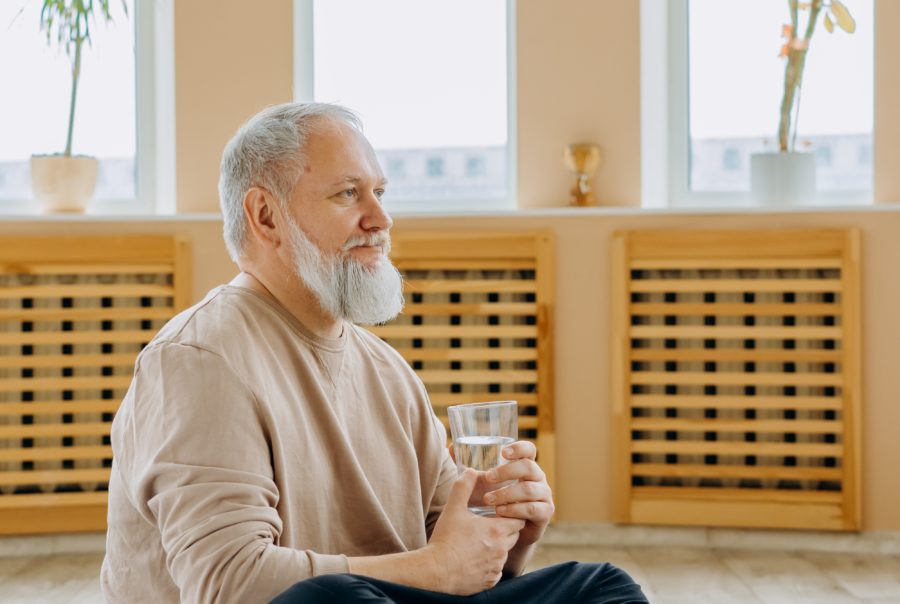
Here are a few to try:
- Look slowly around the space you’re in and notice where you are.
- Remind yourself that you are safe where you are and that you are in the present
- Hold an object you find comforting
- Listen to calming music.
- Take a slow walk, noticing each foot as it touches the ground.
- Gently stretch or release the tension in your body.
- Notice the air against your skin.
- Breathe steadily, allowing the out-breath to become a little longer if it feels helpful. (See breathing exercises below)
- Connect with a person you trust or a pet
- Move somewhere quieter or more peaceful.
Breathing
Trauma survivors often over-breathe. This is because we all breathe faster when we are threatened. This can make some people hyperventilate. Others can experience panic attacks. Our rate of breathing also affects our heart rate, blood pressure and the rest of our body. Slowing breathing slows other processes in our body. It also lowers our level of arousal. This, in turn, reduces tension and stress. Slowing our breathing down can help turn off the ‘fight/flight’ response.
You might find the following ‘controlled breathing techniques’ help you calm yourself if you start to feel tense, anxious or to panic. This is what you can do:
- Focus on your breathing.
- Try to breathe evenly
- Lengthen your breath
- Try to make your breath out slighter longer than your breath in e.g. in for the count of 3 and out for the count of 5.
Box breathing is another technique you can try to help relieve stress or anxiety. Breathe in for 4, hold for 4, breathe out for 4, hold for 4 and repeat.
If you find breathing difficult, lie down and place a small pillow or piece of clothing on your stomach and watch it rise up and down slowly as you breathe.
Doing this every day, if you can manage it, will help lower your stress levels.
Focusing on breathing is particularly effective when you are able to ground yourself. Feel the earth under your feet, the seat you are sitting on. Looking out of a window, stepping outside into the fresh air. These strategies can enhance the effectiveness of breathing.
If panic sets in quickly and it is too hard for you to breathe through it, try breathing in and out of a paper bag.
These strategies can make your breathing more effective.
Repetitive Movements
Doing repetitive movements can be helpful to calm us e.g. try knitting, bouncing a ball, jumping on a trampoline, drumming, or colouring in.
When you’re feeling spaced out, shut down or ‘unreal’ you might be dissociated or hypo-aroused.
When we feel unable to escape or to protect ourselves, our nervous system may move into freeze, shutdown or other defensive responses. Hypoarousal can occur when the nervous system is less activated. This can leave us feeling numb, disconnected, or shut down. When some people are hypo-aroused they may dissociate.
It is best to try and notice as soon as we are shutting down. When we do, we can then use one or more of the following exercises to help us get back into our bodies in the present.
Choose the strategy which helps you so you can use it when you need to ground yourself:
- pushing your feet into the ground
- pushing your backside into the chair
- standing up and stomping your feet against the floor
- pushing your fingernails into the palms of your hands
- stretching
- moving
- your imagination is the limit …
The following ‘orienting’ exercises can help you orientate to the here and now:
- Looking around the room and naming 5 things that begin with C
- Looking at objects and naming them
- Focusing on someone else talking
- Naming the day, date, time, year
- Or other ideas including: using cold water on your face, touching ice, flicking a rubber band on your wrist, or taking a warm shower followed by a cold one.
Some things work for some people. Some with for others. Choose the strategy which helps you most, so you can do it when you feel you are shutting down.
Mindfulness
Mindfulness practices can be helpful for some people with experiences of complex trauma. However, they are not for everyone. If mindfulness is new for you, remember to approach mindfulness practices gradually so you can notice how you are responding in the moment.
If focussing on being present makes you feel uncomfortable or is feeling overwhelming, this practice might not be for you at this time. Certain mindfulness practices can be particularly challenging for people who dissociate or who are heightened. Different grounding or movement exercises might be more helpful if you are experiencing these sorts of reactions.

Blue Knot Helpline and Redress Support Services are specialist services.
Our counsellors provide empathetic, informative and empowering support for adult survivors of childhood trauma (Blue Knot Helpline) and adult survivors of institutional child sexual abuse engaging with redress (Redress Support Services)
Call 1300 657 380